Gabon · Capital: Libreville · Heritage & history
Gabon's heritage: from rock engravings to the Bongo years
Gabon is often described as a country without much history — a forest with oil under it. That is a European
view. Iron-working peoples settled here more than two thousand years ago; the kingdoms of the estuary traded
with Portugal, the Netherlands and France for four centuries; and the modern state has lived through one of the
longest family rules in the world. Here is the story, as honestly as we can tell it.
The deep past: Lopé and the Ogooué
In the middle valley of the Ogooué river, inside today's Lopé National Park, archaeologists have found traces of
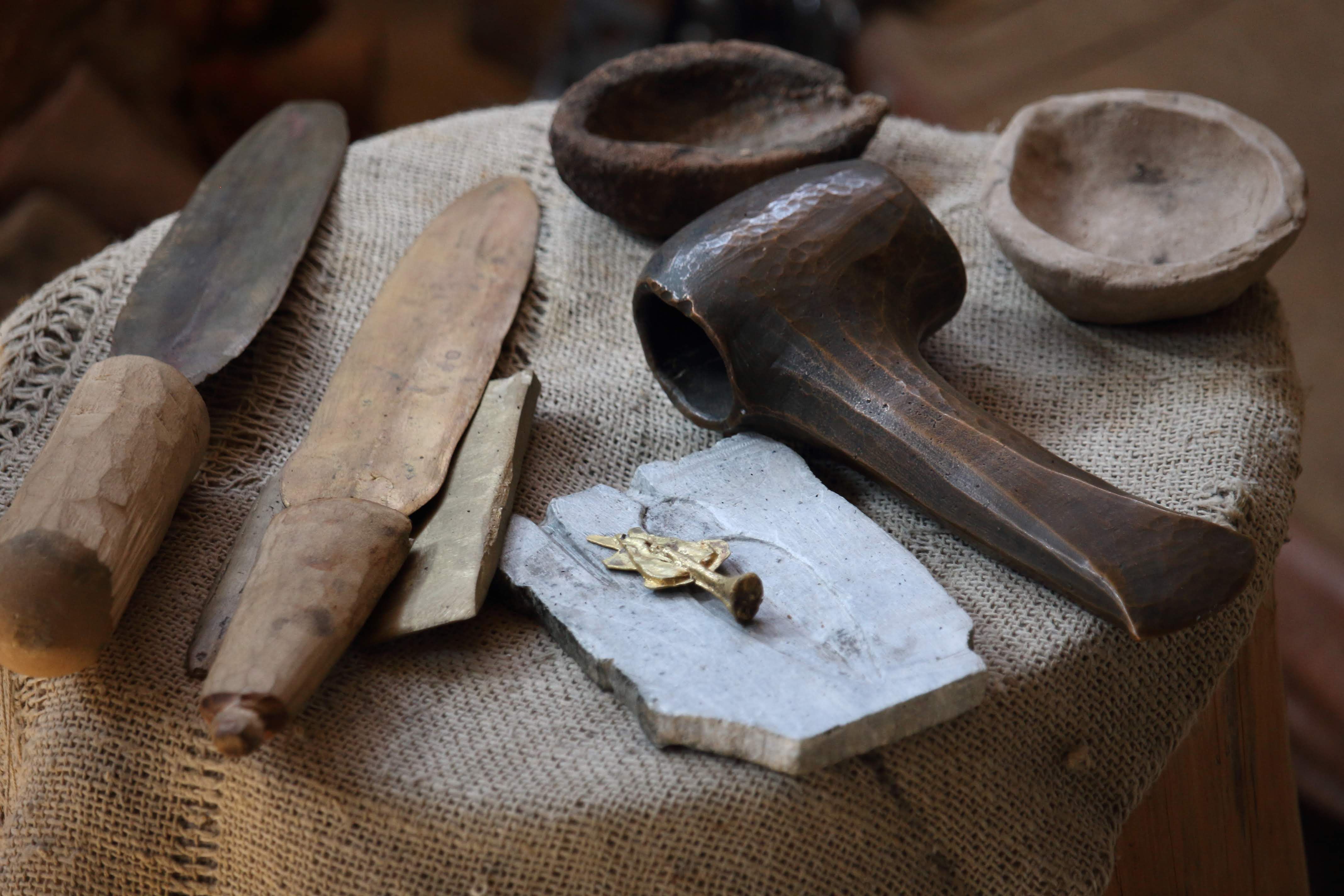
people going back many thousands of years — stone tools, early iron-working sites and more than a thousand rock
engravings cut into the hills around Okanda. Circles, spirals and figures, made by people whose names are lost.
It is why UNESCO listed Lopé-Okanda in 2007 as a site of both natural and cultural value — one
of very few in Africa.
The valley was a corridor. Bantu-speaking farmers and iron-workers moved through it over centuries, meeting the
forest peoples — the ancestors of today's Baka, Babongo and other groups — who had lived in the forest long
before them.
More than forty peoples
Gabon has around forty ethnic groups and as many languages. French is the official language and the one most
people share; the local languages are what they speak at home.
- Fang — the largest group, in the north and the estuary, also living in Cameroon and Equatorial Guinea. Makers of the byeri reliquary guardians and the white ngil masks.
- Myene peoples — the Mpongwe, Orungu and others of the coast and lower Ogooué, the old trading nations of the estuary.
- Punu, Lumbu and their neighbours — in the south-west, famous for the white-faced okuyi masks danced on stilts.
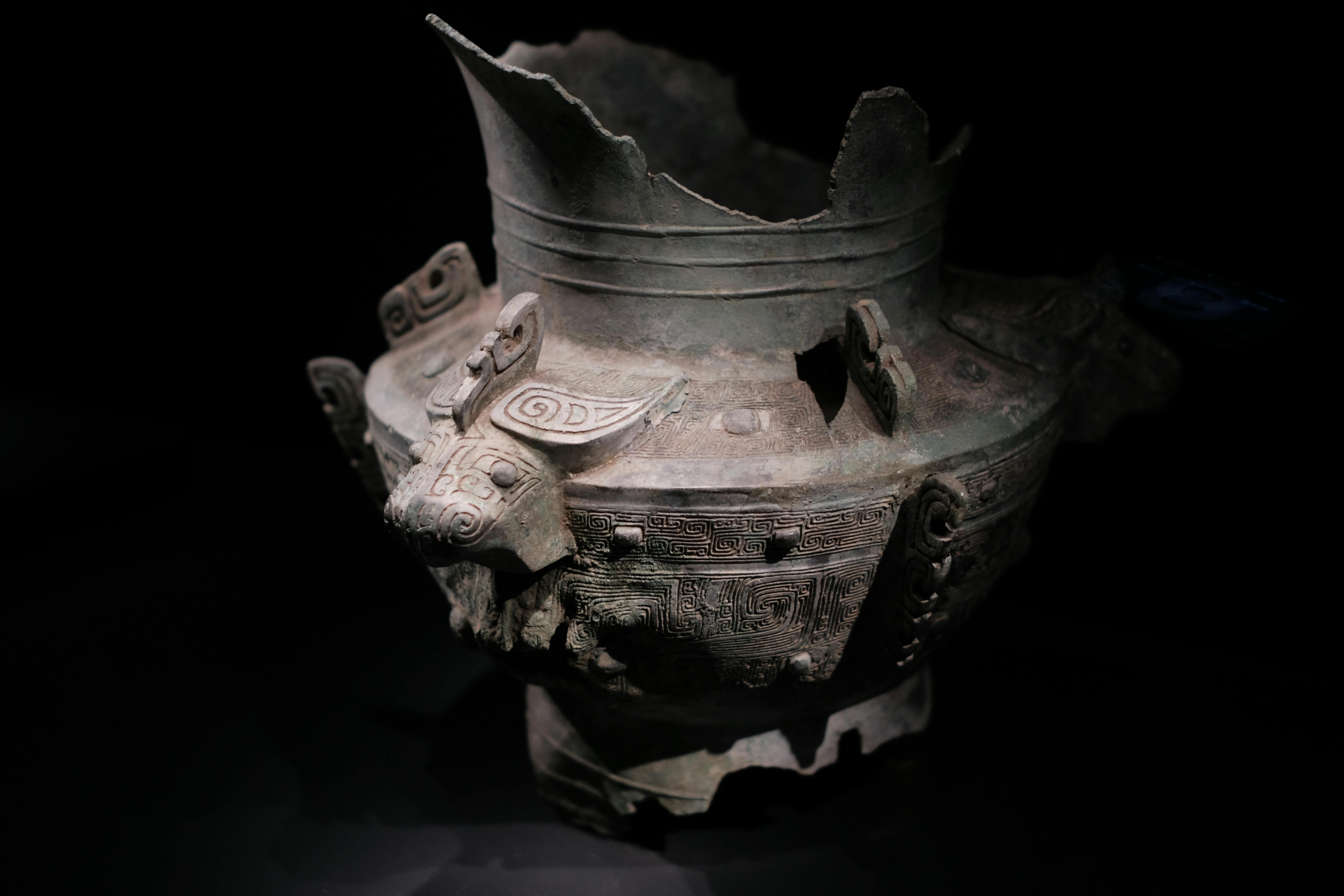
- Kota, Nzebi, Teke and many more — the Kota reliquary figures covered in copper and brass are among the most famous objects of African art.
- The forest peoples — Baka, Babongo and others, who are still the most marginalised citizens of the country.
Masks, Bwiti & museums→
Traders, ships and the slave trade
Portuguese sailors reached the estuary in the 1470s. The name Gabon is usually traced to gabão, a hooded
cloak, which the shape of the estuary reminded them of. For the next four centuries the Mpongwe and Orungu
kings controlled the trade between the interior and the European ships: ivory, ebony, dyewood, rubber — and
people.
Gabon was never one of the largest slave-trading coasts, but the trade was real. Captives from the interior were
sold at Cape Lopez and in the estuary, many of them shipped to São Tomé and on to the Americas. It continued
illegally well into the nineteenth century, long after Britain and France had banned it at sea.
The Atlantic slave trade from the other side of the Gulf of Guinea:
Cape Coast Castle and
Elmina Castle in Ghana.
Libreville: the free town
In 1839 a French naval officer signed a treaty with the Mpongwe king known as Denis Rapontchombo, giving France a
foothold on the estuary. In 1846 a French ship intercepted the slave ship Elizia. A few years later, in
1849, some fifty of the freed captives were settled on the estuary shore — and the settlement was named
Libreville, "free town". It is a founding story with two sides: freedom for those on the ship,
and the beginning of French rule over everyone else.
The French colony
From the 1880s, France pushed inland. Pierre Savorgnan de Brazza explored the Ogooué and claimed the interior;
in 1910 Gabon became part of French Equatorial Africa, with its capital in Brazzaville. The land
was handed to concession companies that forced people to collect rubber and cut timber. Forced labour,
head taxes and recruitment for the railway in neighbouring Congo cost many lives.
In 1913 the Alsatian doctor and theologian Albert Schweitzer opened his hospital at Lambaréné
on the Ogooué. As a German citizen in a French colony, he was interned when the First World War began and later
sent to a camp in France. He came back, rebuilt the hospital and won the Nobel Peace Prize in 1952. Today he is
admired and criticised in equal measure — for his devotion, and for his paternalism.
Independence and the Bongo years
Gabon became independent on 17 August 1960, with Léon M'ba as its first
president. In 1964 the army deposed him — and French paratroopers flew in and put him back in power within two
days. It was a sign of what Gabon would be for decades: the closest of France's African partners, with French
troops based in Libreville and French oil companies in the oil fields.
When M'ba died in 1967, his vice-president Albert-Bernard Bongo — later Omar Bongo Ondimba —
took over. He ruled for 42 years, until his death in 2009, one of the longest reigns in the world. Oil made Gabon
one of the richest countries in Africa per head; most Gabonese never felt it. His son Ali Bongo
Ondimba succeeded him in 2009, was re-elected in a bitterly disputed vote in 2016 — after a stroke in 2018 he governed visibly weakened — and was declared the winner once more in August 2023.
In 2002, Omar Bongo also created the thirteen national parks that are now Gabon's greatest asset. History here
is rarely simple. Read more on African Independence:
Omar Bongo — 42 years in power.
The coup of 2023 — and after
On 30 August 2023, minutes after Ali Bongo was declared the winner of another disputed election,
officers of the Republican Guard announced on television that they had taken power. Their leader was General
Brice Clotaire Oligui Nguema, the head of the guard — and a cousin of the president he removed.
There was little violence, and many people celebrated in the streets.
A new constitution was adopted by referendum, and in April 2025 Oligui Nguema was elected president with about 90
percent of the vote. His main opponent said state resources had been used for his campaign; the government denied
it. Gabon is calm, and the economy and the roads are the main topics of conversation. Whether the end of the Bongo
era also becomes the end of the Bongo system is the open question.
The full independence story: Gabon — two presidents in fifty-six years, and both of them Bongo.
Timeline
- Thousands of years ago People live in the Ogooué valley; later, the Lopé-Okanda rock engravings are made.
- 1470s Portuguese ships reach the estuary.
- 1839 Treaty between France and the Mpongwe king Denis Rapontchombo.
- 1849 Freed captives from the Elizia are settled: Libreville is founded.
- 1910 Gabon becomes part of French Equatorial Africa.
- 1913 Albert Schweitzer opens his hospital at Lambaréné.
- 17 August 1960 Independence; Léon M'ba becomes president.
- 1964 A coup is reversed by French troops.
- 1967 Omar Bongo comes to power.
- 2002 Thirteen national parks are created.
- 2006 Gabon presents its virtual museum at UNESCO in Paris.
- 2009 Omar Bongo dies; Ali Bongo succeeds him.
- 30 August 2023 Military coup ends 56 years of Bongo rule.
- April 2025 Brice Oligui Nguema is elected president.
See Gabon with a guide
Gabon is best understood on the ground, with people who live there. Two full gorilla journeys of six to seven days, from above US$6,000 per person. Not cheap — but they include what makes Gabon so hard to do alone: domestic flights, boats, lodges deep in the parks and the permits for habituated gorillas. Entrance fees and gorilla permits are included in the tour price. Tips for guides, trackers and drivers
are not included, but they are welcome.
Tour links are affiliate links and open in a new tab: if you book, we may earn a small commission at no extra cost to you.