Gorilla tracking in Loango: what it really costs
Gabon travel blog · Capital: Libreville · Loango National Park
Gorilla tracking in Loango: what it really costs
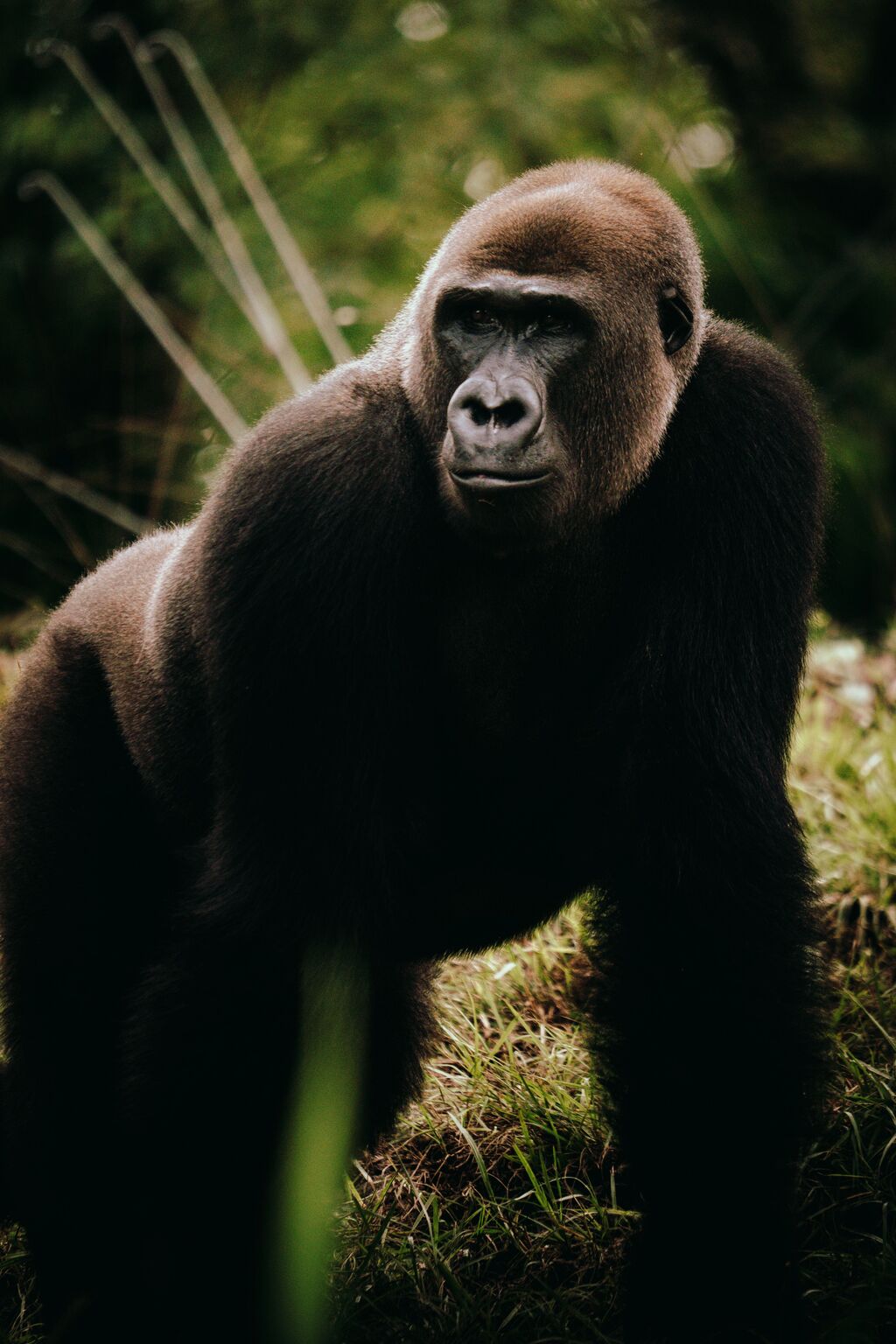
The first thing you hear is a crack of branches somewhere ahead, then the tracker's raised hand. Then, through a curtain of leaves in green half-light, a silverback sitting on the forest floor, chewing, ignoring you completely. You have one hour. It is one of the most expensive hours you will ever buy in Africa — so here is exactly where the money goes, and whether it is worth it.
Search our Network. Start here.
Where the gorillas are
Gabon has tens of thousands of western lowland gorillas, but you cannot simply walk into the forest and meet them. Wild gorillas flee from people. Only groups that have been habituated — followed patiently by researchers and trackers for years until they tolerate humans — can be visited. In Gabon there are only two: one in Loango National Park, tracked from the Akaka area in the south of the park, and one in Moukalaba-Doudou National Park, around 600 kilometres south of Libreville.
Loango's gorilla work grew out of long-term research; scientists from the Max Planck Institute for Evolutionary Anthropology in Leipzig have studied gorillas there for many years. The habituation took a very long time, and it is fragile: every visitor is a risk to animals that can catch human diseases.
The permit
A gorilla permit in Loango costs several hundred euros or dollars per person for one visit. One specialist operator lists the Akaka permit at 550 euros for its 2027 trips; other operators quote considerably more. The permit pays for the trackers, the research team, the rangers and the protection of the group.
- Group size: only a handful of visitors per day.
- Time with the gorillas: one hour, counted from the moment you reach them.
- Age: usually adults and older teenagers only.
- Health: anyone with a cold, cough or fever stays behind — no refunds for honesty, but no exceptions either.
The permit is almost always sold as part of a tour. Entrance fees and permits are included in the tour price; tips for trackers and guides are not included, but they are welcome.
The whole trip: why it costs over 6,000 dollars
The permit is the smallest problem. Getting to the gorillas is the expensive part. There is no road you would want to drive from Libreville to Loango. The usual route is a domestic flight from Libreville to Port-Gentil, then a long boat ride or light aircraft to the Iguela lagoon, then boats and 4x4s inside the park. Some itineraries come the other way, by river from Lambaréné — eight or nine hours in a motorboat.
- Camps: a few small camps — Akaka in the south, Ndola and Louri among others — with very few beds. Everything, from fuel to food, comes by boat.
- Loango Lodge: the long-established lodge on the Iguela lagoon and its satellite camps were closed and announced to reopen in late 2026. Check the current situation before booking.
- Typical price: a week-long Loango gorilla trip from Libreville currently starts at a little above US$6,000 per person sharing — including domestic flights, boats, camps, meals, guides and one gorilla permit.
- Not included: international flights, visa, travel insurance with evacuation, and tips.
The day itself
You leave camp at first light, by boat along a black-water river, then on foot behind the tracker. The trackers know where the group nested the night before and follow fresh signs from there. It can take half an hour or half a day. The forest is flat but wet, hot and full of roots; you will be sweating within minutes.
When you reach the group, you put on a face mask, keep several metres away and stay quiet. Lowland gorillas in dense forest are not the posing mountain gorillas of the Virunga photographs. You may see a back, a hand pulling a branch, a young one climbing — or, if you are lucky, the silverback in a clearing, looking straight at you. Then the hour is over, and you walk back without saying much.
When to go
- Gorillas: operators recommend January to May, when the group travels less per day and is easier to find.
- Elephants and whales: the dry season from about June to September brings forest elephants into the open and humpback whales along the coast.
- Rain: October to December is very wet. Some camps close for part of the year.
Is it worth it?
If you want guaranteed close-up photographs, go to Uganda or Rwanda — it is easier, and the views are often clearer. If you want to be in one of the last great wild forests of Africa, with almost no other visitors, and to know that your money keeps a research and protection project alive, Loango is worth every cent. Just go with the right expectations: this is a wilderness, not a show.
Book the gorilla journey
The two tours below are exactly the trips this post describes: six to seven days, from above US$6,000 per person, with domestic flights, boats, camps and the gorilla permit. Entrance fees and gorilla permits are included in the tour price. Tips for guides, trackers and drivers are not included, but they are welcome.
Tour links are affiliate links and open in a new tab: if you book, we may earn a small commission at no extra cost to you.
More from the Gabon travel blog
The Transgabonais: the night train to Lopé Surfing hippos and beach elephants: Loango, honestly Lambaréné, Albert Schweitzer and the Ogooué Gabon's lost virtual museum and the masks that survived Libreville in three days: museum, markets and the estuary All blog posts
Cameroon Uganda Tanzania travel blog A Museum Made of Light All African Radio Stations
Published and fact-checked . All text © Remo Kurka.