Surfing hippos and beach elephants: Loango, honestly
Gabon travel blog · Capital: Libreville · Loango National Park
Surfing hippos and beach elephants: Loango, honestly
A hippo riding an Atlantic wave. An elephant walking along an empty white beach at sunset. Those two photographs made Loango famous, and they sell trips to Gabon to this day. They are real. But they are not what you will see every day — and the Loango you will actually experience is, in its own way, even better.
Search our Network. Start here.
Where the photographs came from
In 1999 and 2000 the American ecologist Michael Fay walked across the forests of Congo and Gabon on foot — the "Megatransect", 456 days through swamps and rainforest. The photographer Michael "Nick" Nichols went with him for National Geographic. At the end of the walk, on the coast of what is now Loango, Nichols photographed hippos swimming in the surf and elephants on the beach. Fay called the region "Africa's last Eden". The images, and the expedition, helped persuade President Omar Bongo to create Gabon's thirteen national parks in 2002.
The honest reality
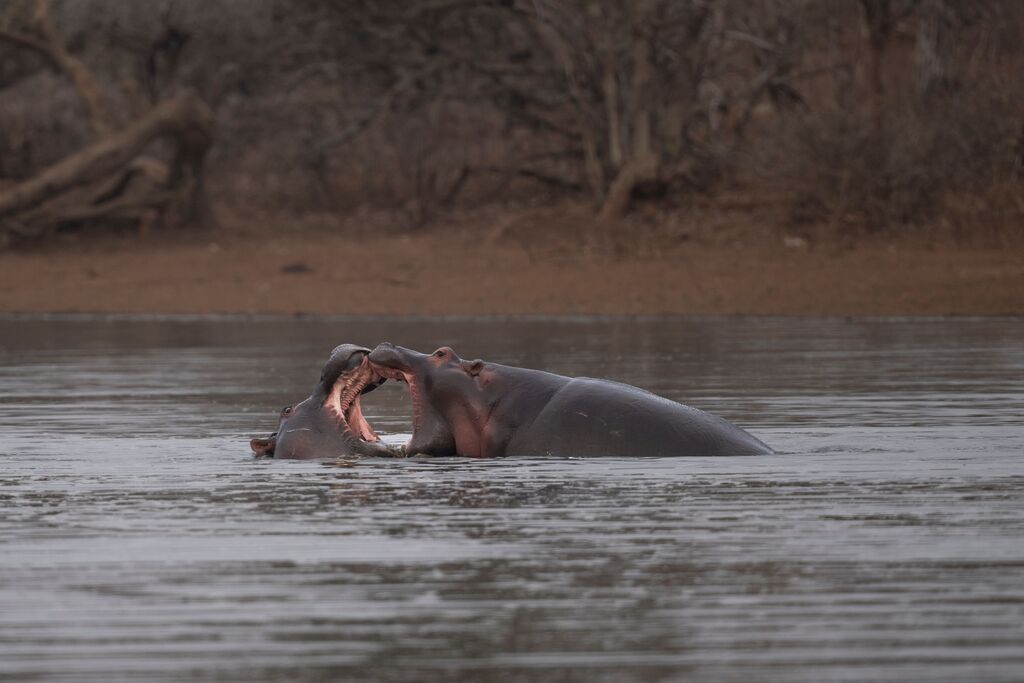
Hippos do go into the sea at Loango, and elephants, buffalo and even leopards do walk on the beaches. But these are wild animals in a huge park, not a performance. Many visitors see elephants on or near the beach; far fewer see a hippo in the surf. The famous pictures were taken at Petit Loango, in the remote south of the park, by a photographer who spent weeks there.
Sources even disagree on the best months. Some guides say hippos are most often seen in the surf from about November to January and elephants on the beach from about February to April; others recommend the dry season from June to September for beach mammals. The truth is that it depends on the year, the rain and luck.
What you will very likely see
- Forest elephants — smaller and darker than savannah elephants, often in the savannah patches, at lagoon edges and sometimes on the beach.
- Hippos — in the lagoons and rivers, if not in the sea.
- Forest buffalo — red-brown, grazing in the grassland behind the dunes.
- Birds — kingfishers, hornbills, fish eagles, and huge numbers of waders.
- Primates — monkeys in the forest, and gorillas if you join the tracking at Akaka.
- Whales and turtles — humpbacks offshore roughly July to September; leatherback and olive ridley turtles nesting roughly November to February.
Seasons in short
- June to September: dry season, cooler, whales offshore, good for elephants and walking.
- October to December: very wet; access harder, some camps close.
- November to February: turtle nesting on the beaches.
- January to May: the best months for gorilla tracking, according to operators.
How to go
Loango is reached by plane from Libreville to Port-Gentil, then by boat or light aircraft to the Iguela lagoon, or by long river journeys from Lambaréné. Almost every visit is organised through an operator that runs camps in or around the park. Accommodation has changed in recent years — the classic Loango Lodge was closed and announced to reopen in late 2026 — so check carefully what is open before you book. Expect to pay several thousand dollars for a week.
Rules on the beach: keep your distance, never get between an elephant and the forest, and no torches on turtle beaches at night unless your guide allows it.
Loango and gorilla tours
Two full gorilla journeys of six to seven days, from above US$6,000 per person. Not cheap — but they include what makes Gabon so hard to do alone: domestic flights, boats, lodges deep in the parks and the permits for habituated gorillas. Entrance fees and gorilla permits are included in the tour price. Tips for guides, trackers and drivers are not included, but they are welcome.
Tour links are affiliate links and open in a new tab: if you book, we may earn a small commission at no extra cost to you.
More from the Gabon travel blog
Gorilla tracking in Loango: what it really costs The Transgabonais: the night train to Lopé Lambaréné, Albert Schweitzer and the Ogooué Gabon's lost virtual museum and the masks that survived Libreville in three days: museum, markets and the estuary All blog posts
Cameroon Uganda Tanzania travel blog A Museum Made of Light All African Radio Stations
Published and fact-checked . All text © Remo Kurka.